
Great Website. Zero Visibility.
Why You Need Organic Search and Answer Engine Optimization Services. This is the fourth post in our Modern Marketing Stack series.

Beautiful sites are everywhere. Discoverable ones are rare. Here’s how organic search engine optimization services that combine Human, SEO, and AEO get B2B websites found, indexed, and cited.
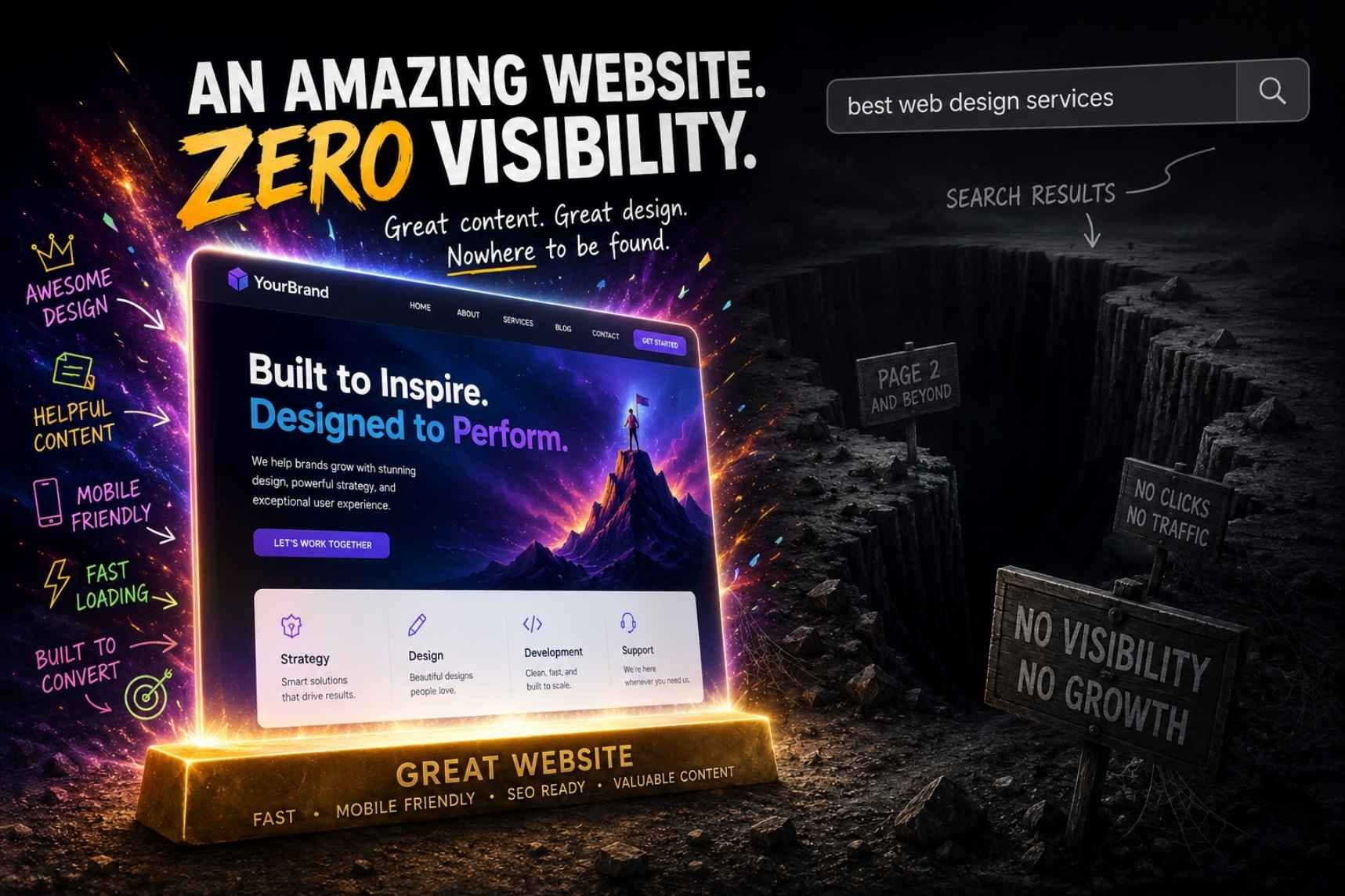
Startups are building beautiful websites that nobody finds. Massive investment goes into branding, design, UX, and product messaging — yet many sites don’t rank, aren’t cited by AI tools, generate no inbound traffic, and end up relying entirely on outbound. Most early-stage companies optimize for appearance, not discovery.
The fix is not a redesign. It’s modern organic search engine optimization services — making your website speak three languages at once: Human, SEO, and AEO.
Live Presentation - Midday Connect - May 19, 2026 at 1pm ET
Join David and learn more about how to make your business discoverable across ChatGPT, Google, Perplexity and Gemini.
What organic search engine optimization services actually deliver
Organic search engine optimization services are the unpaid work that earns visibility in Google, Bing, and AI answer engines. Done well, they cover keyword and intent research, technical indexing, on-page structure, internal linking, content depth, and the answer-ready formatting AI systems prefer when choosing what to cite.
Done poorly, they look like a sporadic blog and a sitemap nobody submitted. The difference between the two is compounding traffic — or another quarter of outbound dependency.
Discovery has changed
Google isn’t the only front door anymore. Buyers research across Google, ChatGPT, Perplexity, Gemini, Bing Copilot, and AI summaries before they ever visit your site. Your website now competes inside answer engines — not just search engines.
That changes the job of your content. It’s no longer just a brochure for humans. It’s training data and a citation source for the systems that recommend you.
The framework: speak three languages
Human — Clear messaging, trust, readability, positioning, and conversion. Built for people.
SEO — Keywords, structure, internal links, technical signals. Built for search engines.
AEO — Answer-ready content, semantic clarity, entities, citations. Built for answer engines.
If your site only speaks one language, modern discovery systems struggle to understand you — and quietly route attention elsewhere.
The invisible website problem
When you don’t speak all three languages, the symptoms are predictable:
Great website, low traffic
AI tools never mention you
Expensive paid acquisition
No rankings for core services
Heavy reliance on outbound sales
Brand stays a secret
Visibility compounds. Invisibility compounds too.
Content is infrastructure now
Content isn’t a campaign anymore. It’s infrastructure that powers search visibility, AI discovery, trust building, sales enablement, and authority signals — all at once.
Your content teaches machines when to recommend you. If it doesn’t, they recommend someone else.
10 ways to make your site speak all three languages
Foundation: get the basics painfully clear
Define the problems you solve. Be specific. Avoid vague positioning that nobody searches for.
Build pages around buyer intent — not your org chart. Real searches, real questions.
Use your customers’ language. Mirror search behavior. Drop the internal jargon.
Weak: “Holistic synergistic platforms.” Strong: “Onboarding software for fintech compliance teams.”
Structure for discovery
Pillar + cluster content. Build topical authority by connecting your expertise.
Answer questions directly. Concise answers, FAQ formatting, clear headings.
Make content scannable. Headers, bullets, short paragraphs, semantic structure. AI systems prefer clean structure.
Technical + AI readiness
Strengthen internal linking. Connect related ideas. Guide crawlers and humans alike.
Ensure your site can be indexed. Set up Google Search Console and Bing Webmaster Tools, submit a sitemap, and monitor crawl health.
Heads up: Bing Webmaster Tools is increasingly important for AI visibility — it powers Microsoft Copilot and is a key index behind ChatGPT search.
Measurement + consistency
Measure what discovery engines see: indexed pages, impressions, citations, referral paths, and engagement.
Publish consistently. Discovery compounds over time. Most startups quit too early.
Visibility is earned through consistency, not one launch.
A simple visibility audit
Three free tools, one quarterly habit:
Google Search Console — Are pages indexed? What queries trigger impressions?
Bing Webmaster Tools — Are AI systems crawling and citing your content?
Google Analytics — Where is traffic coming from? What content holds attention?
Run this audit quarterly. Track the trend, not the day. For a deeper walkthrough, see AI Content Performance.
Why this is good news for early-stage companies
AI discovery levels the playing field. You can answer questions better than incumbents, structure content with more clarity, and demonstrate expertise visibly.
You no longer need the biggest brand. You need the clearest signals.
Final takeaway
Great websites don’t win. Discoverable websites do.
For humans — attract them with clarity and trust.
For search engines — help them understand what you do.
For AI systems — give them reasons to cite you.
If your website doesn’t teach discovery systems who you help, when to recommend you, and why you matter — it stays invisible.
Need some help getting your site noticed? Reach out. I’m a data-driven fractional CMO focused on sales enablement, growth marketing, and go-to-market activations. I focus on all of the elements of the Modern Marketing Stack, and I can help you build a successful program that delivers results.